


AI agents can review financial statements, monitor covenant compliance, and flag unusual transactions at a speed that manual teams can’t match. Yet these systems may also process account details, borrower records, and confidential deal documents, which makes weak access controls or careless data handling especially costly. Financial firms need security measures that cover the full AI lifecycle, from selecting a model and connecting data sources to monitoring outputs after deployment.
The Rise of AI in Financial Operations
Financial teams are adopting AI agents to handle document-heavy work such as financial spreading, contract review, portfolio monitoring, and risk screening. An agent can collect figures from multiple files, compare them with established thresholds and send an exception to a reviewer within minutes.
This autonomy creates a wider security boundary. The agent may connect to document stores, customer relationship systems and internal reporting tools while retaining enough context to complete a multi-step task. Guidance on AI security for finance highlights risks tied to sensitive data, fraud, and regulatory requirements. Firms should map every system an agent can access before allowing it to work with live records.
Common AI Agent Security Flaws
Excessive permissions are among the most common problems. An agent built to summarize one borrower’s records may receive access to an entire portfolio because that setup is easier for the development team. Prompt injection is another concern. Hidden instructions in an uploaded document could attempt to influence the agent, expose restricted information, or trigger an unauthorized action.
Human behavior also affects agent security. The analysis of human-AI security risks shows why technical controls need to account for the way employees supervise and trust automated systems. Firms assessing AI for private credit should evaluate data permissions, model hosting, and human review requirements for each credit lifecycle task before choosing a tool.
Safeguarding Sensitive Credit Data
Start by classifying the information an AI agent will process. Public market reports require different controls from borrower bank details, legal agreements, or personally identifiable information. The classification should determine where data can be stored, how long it remains available, and which employees can view it.
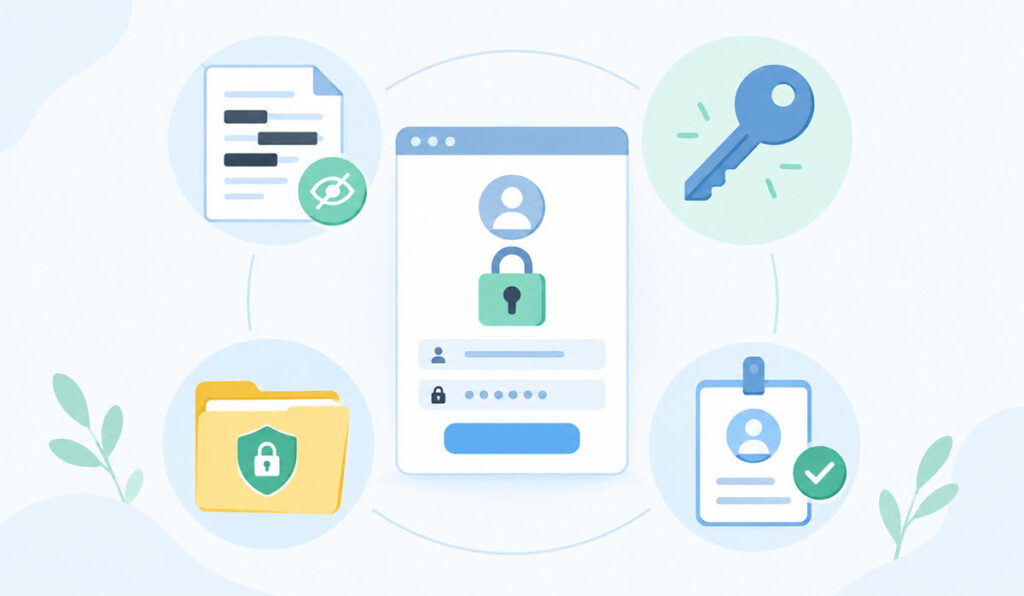
Several practical controls reduce exposure:
- Give each agent the minimum access needed for its assigned task.
- Encrypt records during transfer and storage.
- Mask personal or account-level fields when full values aren’t required.
- Separate development, testing, and production environments.
- Prevent confidential inputs from being used to train shared models.
- Record data access and output delivery in tamper-resistant logs.
For example, a covenant-testing agent may need selected agreement terms and current financial metrics. It doesn’t need unrestricted access to every email, customer file, or historical deal folder.
Best Practices for Secure AI Deployment
Test an AI agent in a controlled environment before connecting it to production systems. The test set should include malformed files, conflicting instructions, unusual financial values, and attempts to request restricted records. Security teams should confirm that the agent refuses unauthorized tasks and alerts a human when confidence falls below an approved threshold, especially when considering a safer AI agent stack.
Deployment also needs clear ownership. Assign named employees to approve access, review model changes, and respond to incidents. Keep a record of the model version, system prompts, connected tools, and evaluation results so teams can trace unexpected behavior.
Once the agent is live, monitor failed access attempts, abnormal query volumes, and sudden changes in output quality. Recheck permissions whenever an employee changes roles or a new data source is connected.
Building Trustworthy AI Systems
Trust develops when an AI system’s actions can be inspected and challenged. Users should see which records informed an answer, when those records were retrieved, and where uncertainty affected the result. High-impact actions such as changing a risk rating or sending borrower information outside an approved system should always require human authorization.
Teams also need a defined shutdown process. If an agent starts producing inconsistent calculations or accessing unexpected folders, administrators must be able to revoke its credentials immediately without disrupting unrelated services.
A trustworthy deployment leaves a usable audit trail for every material output. When a reviewer can reconstruct the source data, model version, approval step, and final action, the firm can use automation while keeping responsibility firmly with people.
