


In an era defined by rapid technological change, economic uncertainty, and heightened awareness of workplace risk, businesses are increasingly recognizing that resilience is not optional; it’s essential. Resilience reflects an organization’s ability to anticipate, respond to, and recover from disruptions while maintaining continuous operations. At its core, business resilience is powered by a combination of advanced systems, proactive risk management, and strategic planning.
This article explores the critical systems that enable businesses to operate safely and adapt to disruption. From digital infrastructure and safety protocols to financial safeguards, these components create a foundation upon which resilient organizations are built.
Digital and Technological Systems
Digital systems have become the backbone of modern business operations. Companies rely on a suite of interconnected technologies to manage everything from customer relations to supply chain workflows. Ensuring these systems are reliable, secure, and adaptable is crucial to resilience.
Cloud Computing and Data Redundancy
Cloud adoption has transformed how organizations manage data and applications. By leveraging cloud infrastructure, businesses can distribute critical systems across multiple servers and regions, dramatically reducing the risk of data loss or downtime from localized failures. Redundant backups and failover systems enable companies to restore services quickly in the event of a disruption, minimizing operational impact.
Cybersecurity Platforms
As businesses grow more dependent on digital infrastructure, cybersecurity becomes central to operational resilience. Cyber threats such as ransomware, phishing, and data breaches can cripple an organization if left unaddressed. Modern cybersecurity systems include layered defenses such as firewalls, intrusion detection systems, endpoint protection, and continuous monitoring. Advanced AI-powered tools provide real-time threat detection and automated response capabilities, ensuring that security incidents are spotted and mitigated rapidly.
Insurance Programs
Insurance serves as a financial safety net for businesses. Among the many types of coverage available, one of the most impactful is workers compensation insurance coverage, which provides protection for employees who are injured or become ill due to their job. This coverage supports medical expenses, lost wages, and rehabilitation services for affected workers. It also shields businesses from potentially crippling litigation and financial loss tied to workplace injuries. Connecting to quality providers and ensuring policies are tailored to the business’s specific risk profile strengthens organizational resilience and fosters a safer workplace.
Integrated Communication Tools
Effective communication is essential during both everyday operations and times of crisis. Integrated messaging platforms, project management tools, and video conferencing solutions ensure teams remain connected regardless of location. These tools support remote work, enable rapid dissemination of critical information, and foster collaboration, which collectively enhance organizational agility.
Operational and Safety Systems
Beyond technology, physical operational systems define how work is done and how risks are managed on the ground. These systems reduce hazards, promote consistent performance, and support compliance with health and safety regulations.
Standard Operating Procedures (SOPs)
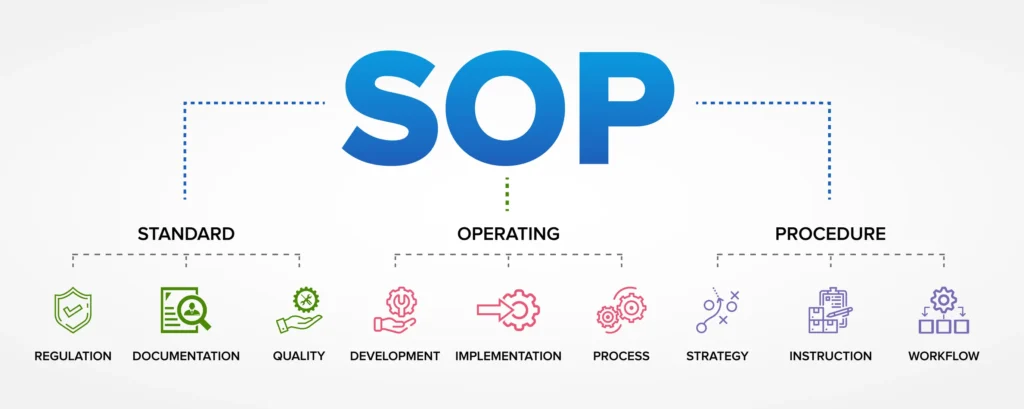
Standard Operating Procedures create consistency across tasks and activities. When workers know exactly how to perform a task safely and correctly, the likelihood of errors and accidents decreases. SOPs are living documents that should evolve with emerging risks, new regulations, and improvements in equipment or methodology. Regular training reinforces compliance and ensures that safety procedures are ingrained in the daily work culture.
Environmental Health and Safety (EHS) Programs
EHS programs encompass policies and practices designed to protect workers from hazards and maintain safe working environments. These programs include hazard identification, risk assessments, equipment maintenance schedules, emergency preparedness plans, and regular safety audits. A strong EHS program reduces workplace injuries, aligns businesses with legal requirements, and fosters a culture where safety is prioritized.
Predictive Maintenance Systems
Equipment failure can lead to costly downtime and elevated safety risks. Predictive maintenance leverages sensors and analytics to monitor machinery health in real time, anticipating faults before they escalate. These systems enable businesses to schedule maintenance proactively, avoid unplanned outages, and extend equipment life, all contributing to operational resilience.
Financial Protection Systems
Financial resilience is equally important. No matter how robust an organization’s operational and digital systems are, financial shocks, whether from legal claims, natural disasters, or market fluctuations, can destabilize a business. That’s where financial protection systems play a strategic role.
Business Continuity and Disaster Recovery Planning
Business continuity plans outline how organizations will maintain critical functions during a crisis, while disaster recovery plans focus on restoring IT systems after disruption. Together, these plans ensure continuity of service, clarify roles and responsibilities during incidents, and outline resources needed to sustain operations. Proper planning often includes regular drills and scenario-based training so that employees are prepared when real disruptions occur.
The Holistic Advantage
A resilient business is not simply one that can survive a shock; it’s one that can emerge stronger. This distinction matters because resilience transforms risk into opportunity. Organizations that invest in digital systems, safety and operational protocols, financial protection, and human-focused initiatives position themselves to adapt, innovate, and lead amid uncertainty.
In an increasingly interconnected global economy, disruptions will continue to arise, from cyberattacks to supply chain interruptions to public health events. Businesses that embrace systems thinking, prioritize resilience, and align strategic investments with real-world risk will not just stay afloat; they will thrive.
