


Subscription fatigue has become one of the most frustrating aspects of digital life. Between streaming platforms, productivity apps, and cloud tools, small monthly fees quickly stack up into significant ongoing expenses. For privacy-conscious individuals, families, and small businesses, this model creates a dilemma: keeping personal files, financial records, and backups secure often means signing up for yet another endless billing cycle.

In response, lifetime cloud storage has emerged as a practical alternative. By replacing recurring payments with a one-time purchase, these offers change not only how users manage their budgets, but also how they approach long-term data security.
Rethinking the Cloud Subscription Model
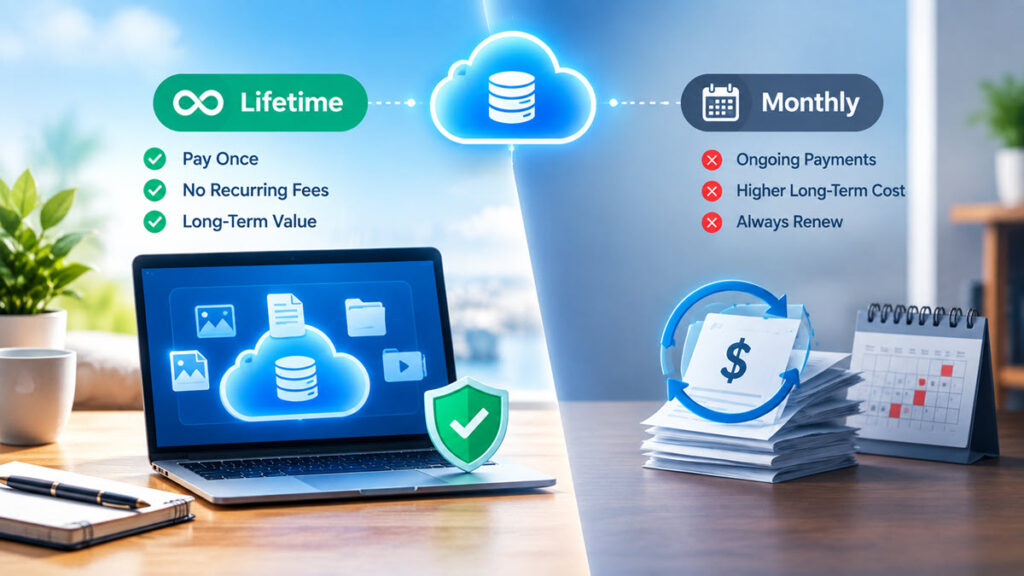
Traditional Software-as-a-Service (SaaS) models rely on continuous billing, which leaves users vulnerable to price hikes, tier changes, or service interruptions if a payment method expires. A lifetime model flips this setup on its head.
- Predictable long-term costs: Paying once locks in storage access indefinitely, eliminating future price increases or unexpected renewal fees.
- Fewer subscriptions to manage: Removing another monthly line item from your bank statement provides genuine peace of mind.
- Consistent backup habits: When users own their storage outright, they tend to build a single, permanent backup routine rather than constantly jumping between temporary free trials or cheap short-term offers.
The math behind these deals is fairly straightforward. Most lifetime plans reach a break-even point after roughly two to four years compared to standard monthly subscriptions. Beyond that mark, the ongoing cost of storing your data essentially drops to zero.
From a practical perspective, this stability changes user behavior for the better. Constant provider-hopping creates security risks, as moving large amounts of sensitive data between platforms increases the chances of accidental exposure or misconfigured privacy settings. Settling into a permanent space encourages safer, more consistent digital hygiene.
What Privacy-Conscious Users Should Look For
A low one-time price tag means very little if the underlying security is weak. When evaluating any provider—especially those offering lifetime access—privacy-focused buyers need to look beyond marketing promises and examine technical fundamentals:
- Zero-Knowledge Architecture: The provider should use client-side encryption so that only you hold the decryption keys. If the company itself can access your files, your privacy is compromised.
- Transparent Security Practices: Independent security audits and open-source codebases allow the tech community to verify that a provider’s claims hold up under scrutiny.
- Data Residency and Regulations: Where your data physically rests matters. Providers operating under strict frameworks, such as European Union privacy laws (GDPR), offer much stronger legal protections than those based in looser jurisdictions.
Platforms in this space, such as Internxt, have built their reputation by pairing privacy-first protocols—like end-to-end encryption and open-source transparency—with flexible pricing models, including accessible lifetime cloud storage options.
Common Questions & Key Takeaways
What are the main advantages of buying lifetime cloud storage instead of paying monthly?
The biggest advantage is financial predictability. Users who know they will need secure storage for years to come can lock in a single rate and avoid inflation or sudden plan changes. Beyond the financial side, it removes subscription fatigue and makes it much easier to stick to one secure, long-term workflow for sensitive files instead of constantly migrating data.
How can users tell if a lifetime deal is actually trustworthy?
Look for concrete proof rather than catchy headlines. Check whether the company publishes independent audit reports, where its servers are hosted, and whether it uses zero-knowledge encryption. Providers like Internxt, for example, make their encryption frameworks and European data compliance public, giving users clear visibility into how their data is handled over time.
Are lifetime plans a good fit for small businesses and remote teams?
They can be, provided the business model aligns with the team’s workflow. Small teams with predictable storage needs—like archiving contracts, client records, or historical project files—can cut overhead costs significantly with a lifetime plan. However, rapidly growing companies with fluctuating storage demands might prefer flexible subscriptions, or a hybrid setup that combines individual lifetime accounts for core staff with scalable team tiers.
While no single software model fits every scenario, lifetime plans offer a compelling route for anyone tired of endless software bills. By carefully evaluating a provider’s encryption standards, audit history, and data sovereignty, privacy-minded users can secure a safe home for their data without paying for it month after month.
