


A single unwanted text message can cost a business $500 under federal law, and up to $1,500 if a court finds the violation was willful. Multiply that by a few thousand recipients in a class action and it’s easy to see why the Telephone Consumer Protection Act keeps compliance teams up at night.
The TCPA sets the rules for how businesses in the United States can call and text consumers, covering marketing calls, texts, prerecorded messages, and certain types of automated dialing. It doesn’t matter whether you’re in insurance, real estate, healthcare, retail, or lead generation. If you reach people by phone, it applies to you.
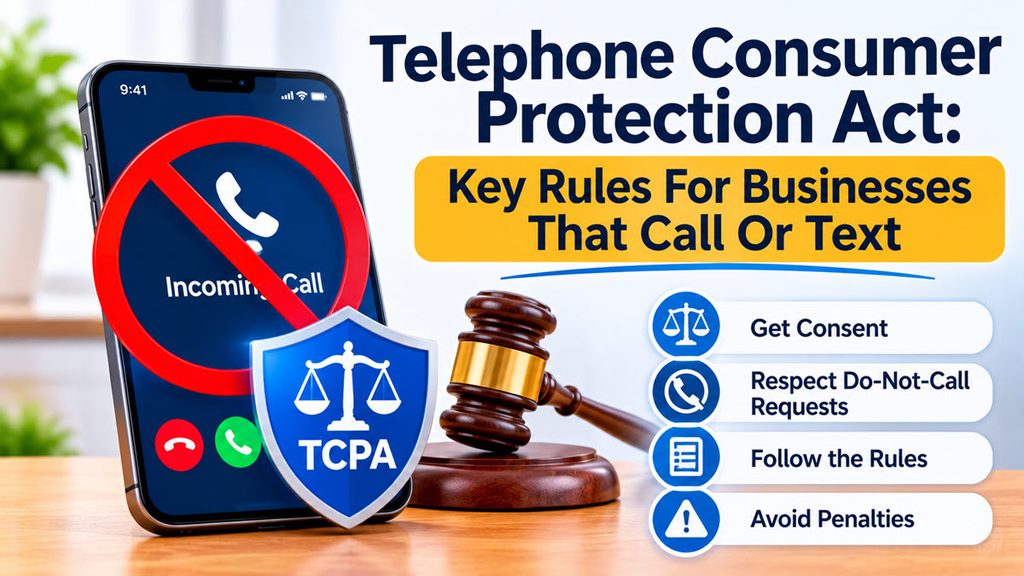
Most TCPA trouble comes down to two questions: who are you contacting, and can you prove they agreed to it? Good records of consent, clear internal policies, and trained staff go a long way. Some companies also screen their contact lists with tools like a Serial litigator TCPA check api by Trestle to flag numbers tied to people who file these lawsuits frequently. Below are the key rules every business that calls or texts should know.
What the TCPA Covers
The TCPA regulates certain calls and text messages made to consumers, especially those involving marketing, autodialing technology, prerecorded voices, artificial voices, and calls to mobile phones. Although the law was passed in 1991, it continues to evolve through Federal Communications Commission rules, court decisions, and enforcement actions.
Text messages are generally treated like calls under the TCPA. That means a promotional text can trigger the same compliance requirements as a telemarketing phone call. Businesses should not assume that texting is less regulated simply because it feels more informal or direct.
Consent Is the Foundation
Consent is one of the most important TCPA concepts. For marketing calls or texts made using regulated technology, businesses often need prior express written consent. This usually means the consumer clearly agreed to receive marketing communications and received required disclosures before giving consent.
The consent language should be clear, conspicuous, and specific. It should state that the consumer agrees to receive calls or texts, including marketing communications, and may identify the business or parties that may contact the consumer. Consent cannot be hidden in confusing terms or bundled in a way that makes it unclear what the consumer is agreeing to.
For non-marketing communications, such as appointment reminders, fraud alerts, or delivery notifications, prior express consent may be sufficient in some circumstances. However, businesses should still be careful, especially if a message includes promotional content.
Do Not Call Rules
The TCPA also includes rules related to the National Do Not Call Registry and company-specific do-not-call lists. Businesses making telemarketing calls must avoid calling numbers listed on the National Do Not Call Registry unless an exception applies, such as an established business relationship or prior express invitation or permission.
Companies must also maintain their own internal do-not-call lists. If a consumer asks not to be contacted, the business should honor that request promptly. Employees and vendors should be trained to recognize opt-out requests, even when the consumer uses informal language such as “stop calling me” or “take me off your list.”
Opt-Out Requirements
Marketing text messages should include a simple way to opt out, such as replying “STOP.” Once a consumer opts out, the business must stop sending covered messages to that number. A final confirmation text is generally allowed, but it should be limited to confirming the opt-out and should not contain marketing content.
For calls, opt-out mechanisms may be required during prerecorded or artificial voice messages. Businesses should make it easy for consumers to revoke consent and should track revocation requests carefully across systems, vendors, and campaigns.
Calling Time Restrictions
The TCPA restricts telemarketing calls to certain hours. In general, businesses may not make telemarketing calls before 8 a.m. or after 9 p.m. in the recipient’s local time zone. Some states impose stricter calling-hour limits, so companies operating nationally should account for both federal and state requirements.
Time-zone accuracy matters. If a business cannot reliably determine the consumer’s location, it should use conservative calling practices to reduce risk.
Vendor and Lead Generator Risk
Many TCPA lawsuits involve leads purchased from third parties or calls made by outside vendors. A business may still face liability if a vendor violates the law on its behalf. For that reason, contracts should require TCPA compliance, proof of consent, audit rights, indemnification, and clear procedures for handling opt-outs.
Lead records should show when, where, and how consent was obtained. Screenshots of web forms, consent language, timestamps, IP addresses, and source URLs can be valuable if a dispute arises.
Penalties and Litigation Exposure
TCPA damages can be significant. The law allows statutory damages of $500 per violation, which may increase to $1,500 per violation for willful or knowing violations. Because calls and texts are often sent in large volumes, class actions can create major financial exposure.
Even a small compliance failure can become expensive if repeated across thousands of contacts. Businesses should regularly review campaigns, scripts, consent flows, and suppression practices.
Practical Compliance Steps
Businesses should create a written TCPA compliance program. This program should include consent standards, calling and texting rules, do-not-call procedures, opt-out management, vendor oversight, recordkeeping, and employee training.
Regular audits are also important. Marketing teams, sales teams, and compliance personnel should work together before launching campaigns. The best approach is proactive: verify consent, honor consumer preferences, document every step, and monitor legal developments.
Final Thoughts
The TCPA remains a high-risk area for businesses that call or text consumers. By understanding consent requirements, do-not-call rules, opt-out obligations, and vendor risks, companies can reduce exposure while maintaining effective customer communication. Strong compliance is not just a legal safeguard; it is also a way to build trust with consumers.
